Forgotten Soldiers
Thetford First World War survivors now commemorated

Thetford First World War survivors now commemorated
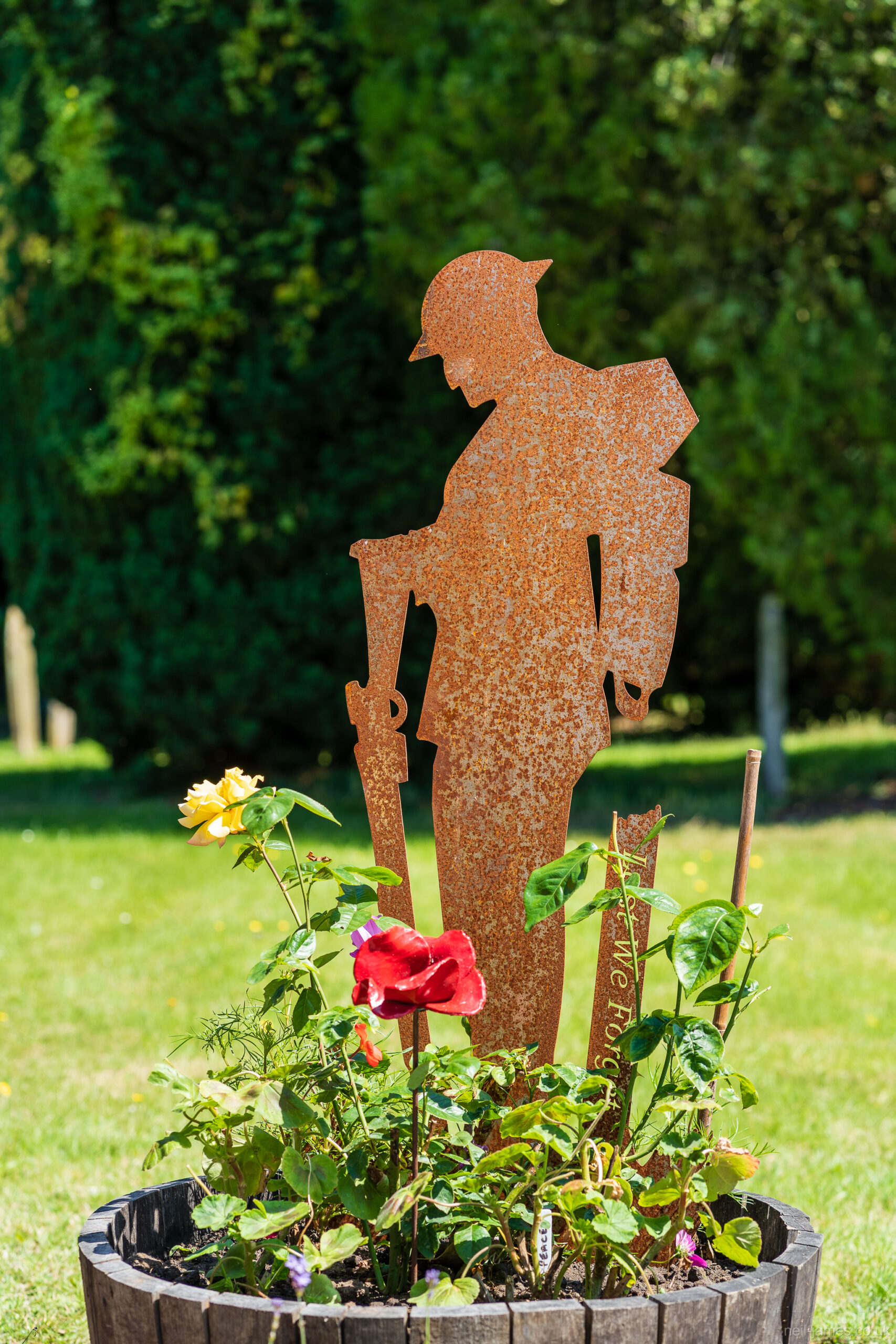
Leaping Hare co-ordinated the National Lottery Heritage Funded project ‘Peace Comes to Thetford – The Forgotten Soldiers’, which has concluded with the opening of a special memorial garden at Thetford’s London Road Cemetery. The project focused on the men who survived the First World War and returned home to Thetford, suffering life-changing circumstances or sadly dying as a result of their injuries. The Commonwealth War Graves Commission dedicated war years are 4.8.1914 – 31.8.1921. Those who died after that date, even as a result of the war, are not classed as war deaths and are not therefore officially commemorated.
Volunteers researched and plotted the graves of those buried in Thetford cemetery and discovered that several have no grave markings at all. Sadly, things took on a whole new meaning when we lost one of our own volunteers, our dear friend and local historian David Osborne. He was passionate about the forgotten soldiers and was particularly looking forward to the installation of a double-sided display board, which would help tell their story. The Cemetery Display Boards have been designed to be a permanent outdoor accessible exhibition of the project’s work and will be a lasting legacy designed to last many years.
The display board details a trail map of the graves and their locations to assist with people finding their way and the reverse tells some of their and David’s stories.
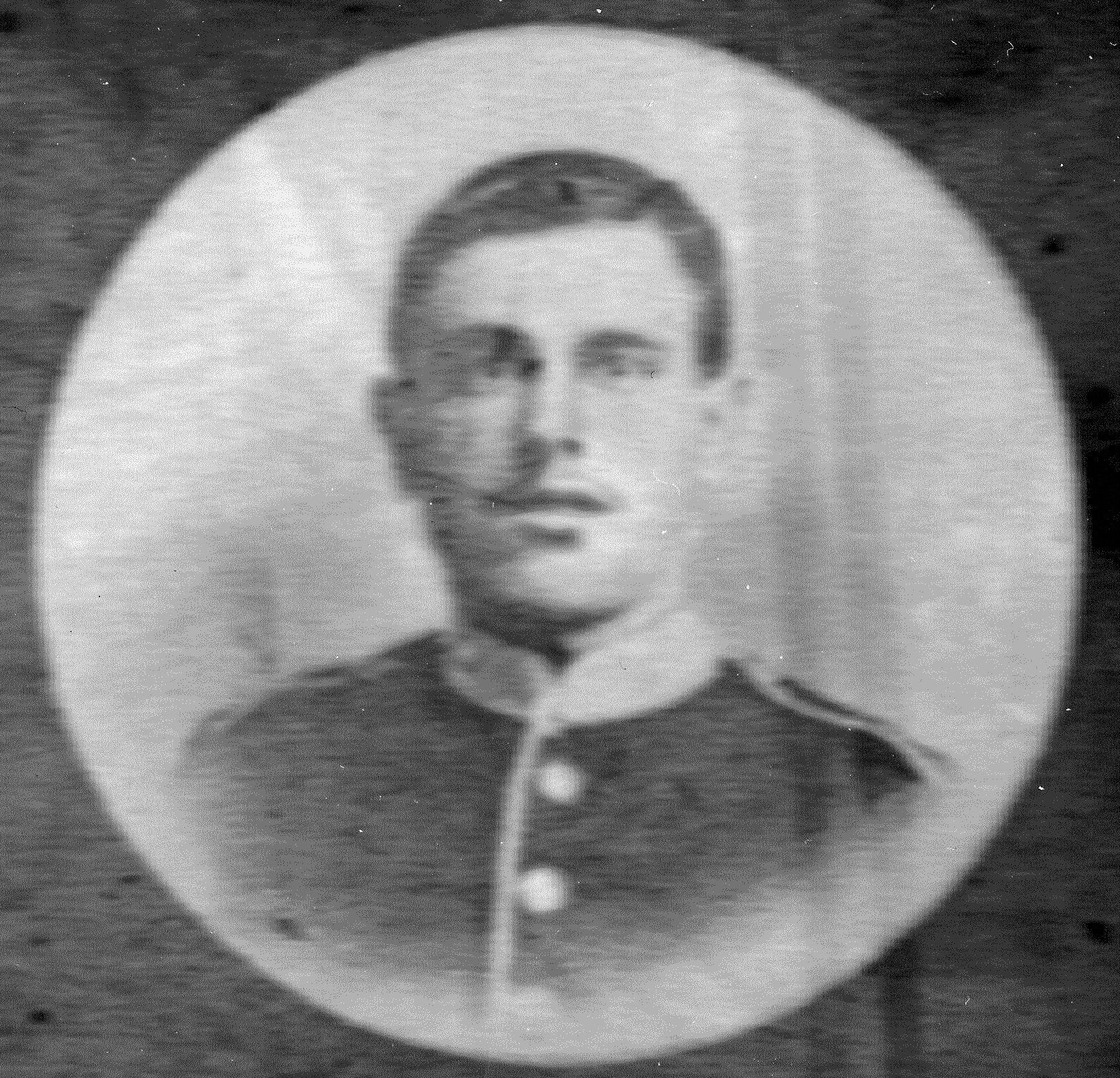
 Albert Wyatt
Born in Kenninghall, was one of seven brothers who served. He joined the West Yorkshire Regiment to be with his brother, Herbert, in 1907. Albert had a distinguished military career and was something of a local hero after he was awarded the DCM for conspicuous gallantry in action while serving as a Sergeant on the Western Front with the Bedfordshire Regiment in 1916. ‘He led a bombing raid with great courage and determination, clearing two enemy trenches and capturing thirty-four prisoners. Later he reorganised the defence of the position and maintained it against repeated attacks.’
Sgt Albert Wyatt also served with the Norfolk Regiment, Northamptonshire Regiment and Defence Corps before being discharged unfit for service in 1917, having been seriously wounded in action and not for the first time. He died on 23 October 1928 aged 41 and is buried in Thetford Cemetery PLOT FD 107.
Whilst serving on the Western Front in December 1914, Corporal Wyatt, 1st Norfolk Regiment, wrote a letter home to his mother at Thetford, describing a football match they played on Christmas Day in no man’s land against German soldiers from the opposite trenches.
Frederick and James Coulson
From Pike Lane, Thetford, initially joined the 6th Battalion Norfolk Regiment (Cyclists) before going to France in 1916 at the age of 18. In 1918 he was badly gassed and suffered shell-shock. As a result of his injuries, Fred was discharged from the army in February 1919 and returned home. One of the effects of the different gasses and chemicals used during the war was blindness and Fred obviously had severe problems as he received regular treatment at the Norfolk and Norwich Eye Infirmary. To aid his recovery, he was sent to a convalescent hospital in Birmingham in January 1921 and stayed there for ten months before returning to the Norfolk and Norwich. He spent Christmas with his family in December 1921 at home in Thetford. Clearly unwell, Fred returned to the Norfolk & Norwich where he finally lost his battle on 4 January 1922 at the age of 24.
Fred’s brother Jim died just 4 years later in December 1926 aged 33.
Henry Arthur Stearne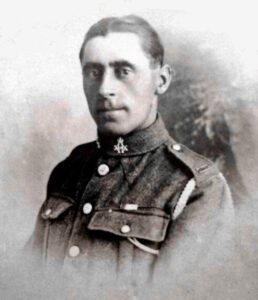
Born 24 May 1891 in Grove Lane, Thetford, his family moved to Bury Road, where he lived until 1914. He learnt to become a leather and metal worker at Burrells, later becoming a sadler, which became very useful to him during the war. He joined the 4th Hussars in 17 February 1912, serving for seven years 3 months. Sent to France, he spent the first ten months on the Somme until, suffering the effects of gas and wounded in the leg, he was taken to Rouen General Hospital on 21 June 1915. After treatment he was transferred to the Mons region. In the final retreat of Mons, he was awarded the Mons Star or ‘1914’. He was also awarded a wounded Lapel Badge, which he was to wear on return to England to ensure that people understood he was ill – many not serving were sent white feathers by the general public. Henry was sent back to the Somme on 23 February 1916 where he remained until the end of the war staying in the Reserve until Demob on 16 February 1929.
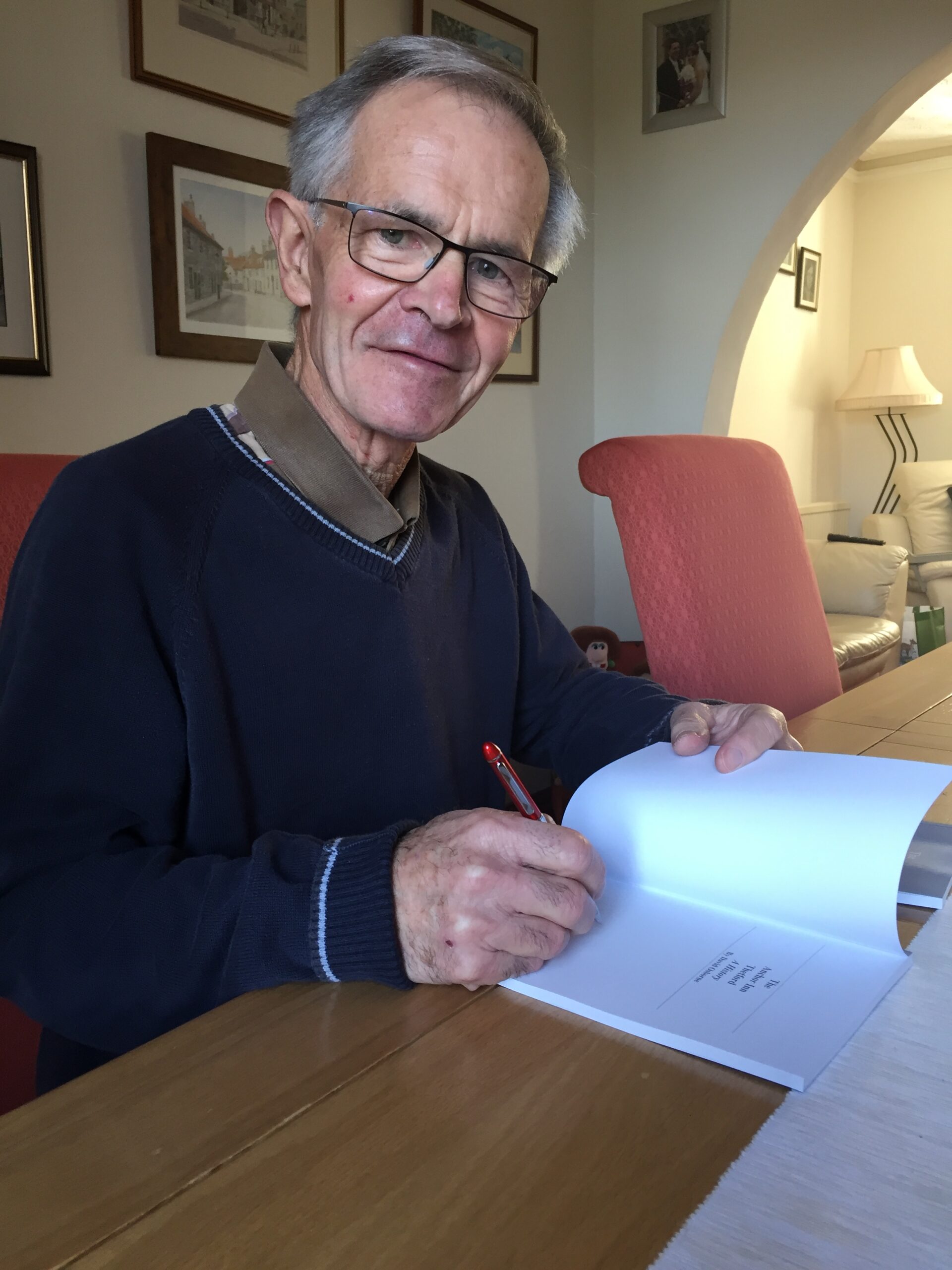
David Osborne
Thetford born and bred on 9 July 1948, David dedicated many years to the promotion of Thetford. He published seventeen books producing an unequalled and invaluable catalogue of Thetford’s history. David joined the military as a Royal Engineer at the age of 15 and while he was on leave in 1972, he met and fell in love with Joy Leeder. They married just one year later and their daughters Emma and Elizabeth arrived in 1975 and 1980. He left the Army and settled back in Thetford in 1978. He had a great passion for Thetford’s forgotten soldiers and was a founder member of this project. Sadly, we lost David on 20 September 2019.
“As time passes we will all be forgotten, but thanks to David’s words and his attention to detail, life in Thetford, past and present, will be remembered and enjoyed by many for centuries to come.”
George Angus, former Mayor’s Officer.
David Osborne was awarded the honour of being granted the Freedom of Thetford on 11 September 2019.
The opening ceremony of The Forgotten Soldiers and David Osborne Memorial Garden
Coming soon: Audio interview in Thetford with David Stearne and his uncle John Stearne, talking about his father and his First World War connection