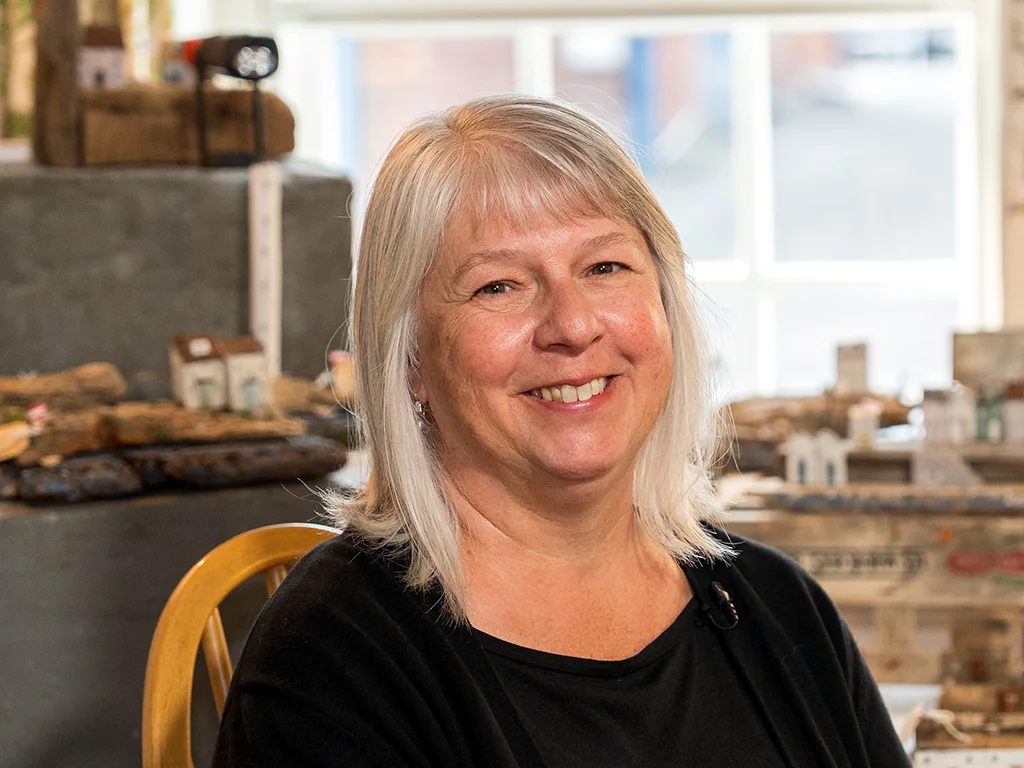
Maker Spotlight : Christine Sanderson
Hullabaloo
Christine Sanderson | Needle-felt artist & maker
From a pile of fleece, a character emerges
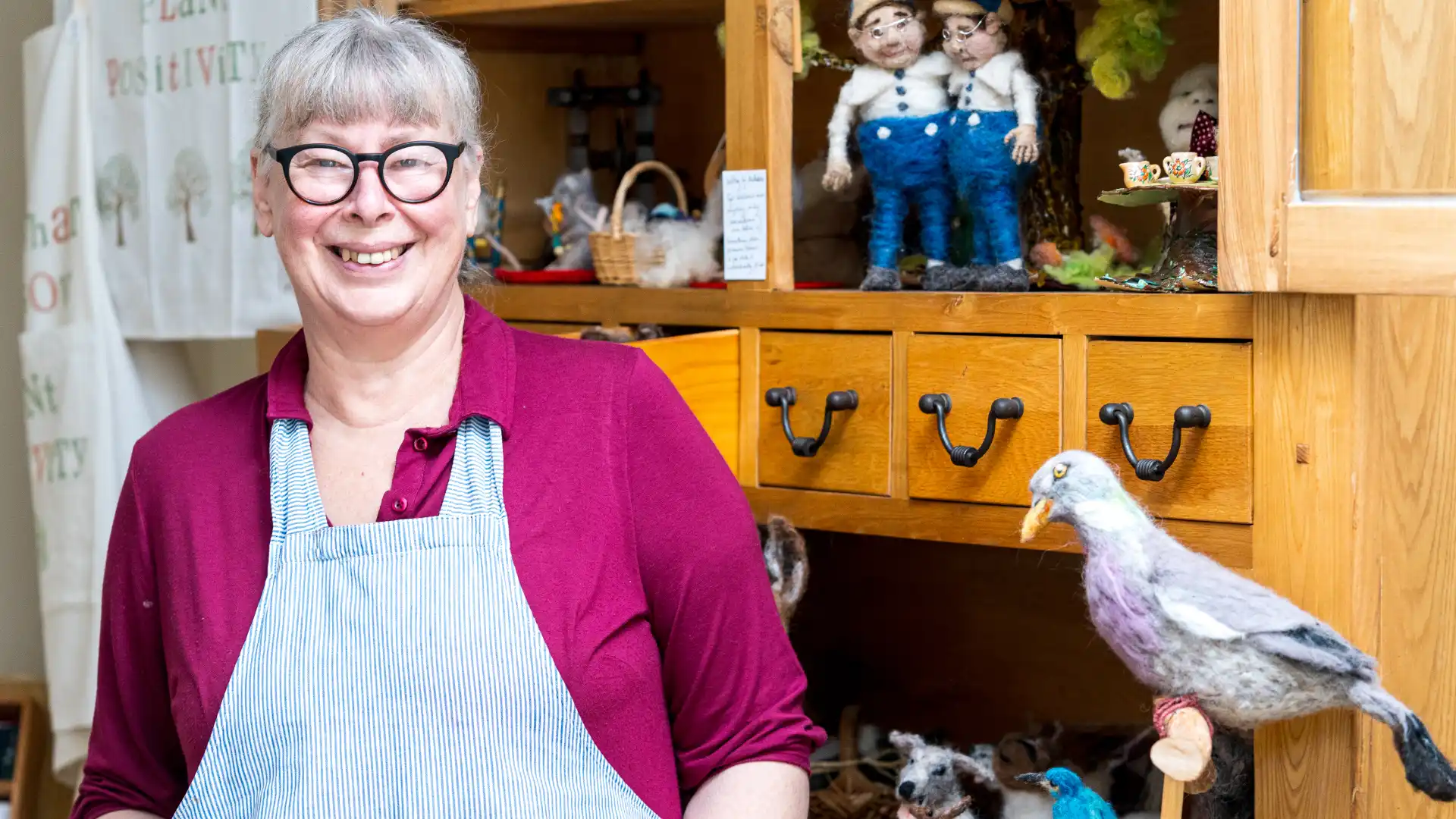
Give Christine Sanderson some fleece, a felting needle and a little time, and something rather wonderful begins to happen.
A shape forms. Features appear. And then comes the moment Christine loves most: when an animal’s character begins to emerge from what, not very long before, was little more than a length of wire and a pile of fleece.
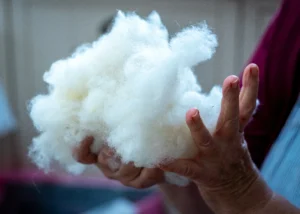
Christine creates characterful needle-felted animals, particularly dogs, using natural sheep’s fleece sourced largely from local rare-breed and small hobby flocks. Some comes to her through friends and local contacts, while a recent haul included twelve Norfolk Horn fleeces from the flock at Gressenhall Farm & Workhouse.
Working with natural fleece gives each finished piece its own colours, textures and character — and connects it directly back to the material from which it began.
A lifetime of making
Making things has been part of Christine’s life for as long as she can remember. As a child she was happiest with paper and pencils, while her grandmother and aunt taught and inspired her to knit and sew.
Her grandmother remains a particular influence. With little money and few materials, she was an instinctive recycler who could create something wonderful from very little — a resourcefulness Christine still recognises in herself and the things she makes today.
Three years studying fashion at art college gave Christine the freedom to let her imagination loose — sometimes very loose. Her final fashion show featured billowing ballgowns made from plastic and jackets made from bubble wrap, with individual bubbles filled with tiny objects and coloured jelly.
A career in conventional fashion perhaps wasn’t on the cards.
Instead, Christine’s creative path eventually took her into professional window dressing, fashion shows and store openings. Different materials and different skills, but always the same instinct: taking something ordinary and transforming it.
“My happy place”
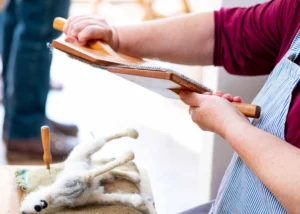
Needle felting began simply. Christine bought herself a few needles and some commercially produced fleece because she’d wanted to try it for some time.
She hadn’t anticipated quite how much it would consume her.
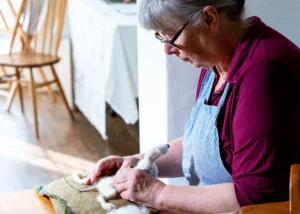
Today, spending time in her little workroom felting is what Christine calls her “happy place”.
For Christine, the skill isn’t simply in manipulating the fleece. It’s being able to visualise the finished piece and gradually work towards it — building, shaping and refining until the personality she could see in her imagination finally appears.
And because each piece is made individually by hand, it has something that mass-produced objects simply can’t replicate: its own character.
From fleece to finished piece
Christine’s fascination with fleece extends well beyond needle felting. She usually prepares the raw fleece herself, sorting it, removing grass seeds, twigs and other debris, and washing it several times before it is ready to use. She also spins fleece, working with traditional fibre skills and developing an understanding of the material long before it becomes a finished object.
Christine often dyes her own fleece too, particularly when she needs colours such as greens and blues for landscapes. Using a process known as exhaustion dyeing, she works successive batches through the dye bath until little or no dye remains, producing a range of increasingly subtle shades.
Sometimes the natural colours of several different fleeces are deliberately mixed together. Christine’s favourite long-faced dogs, for example, get their distinctive brindled coats from handfuls of different fleece blended by hand, while still allowing the individual colours to show through.
That connection with the material matters. Christine believes locally made work gives us the opportunity to own something as individual as the person who created it — while supporting makers so that they can continue creating new work.